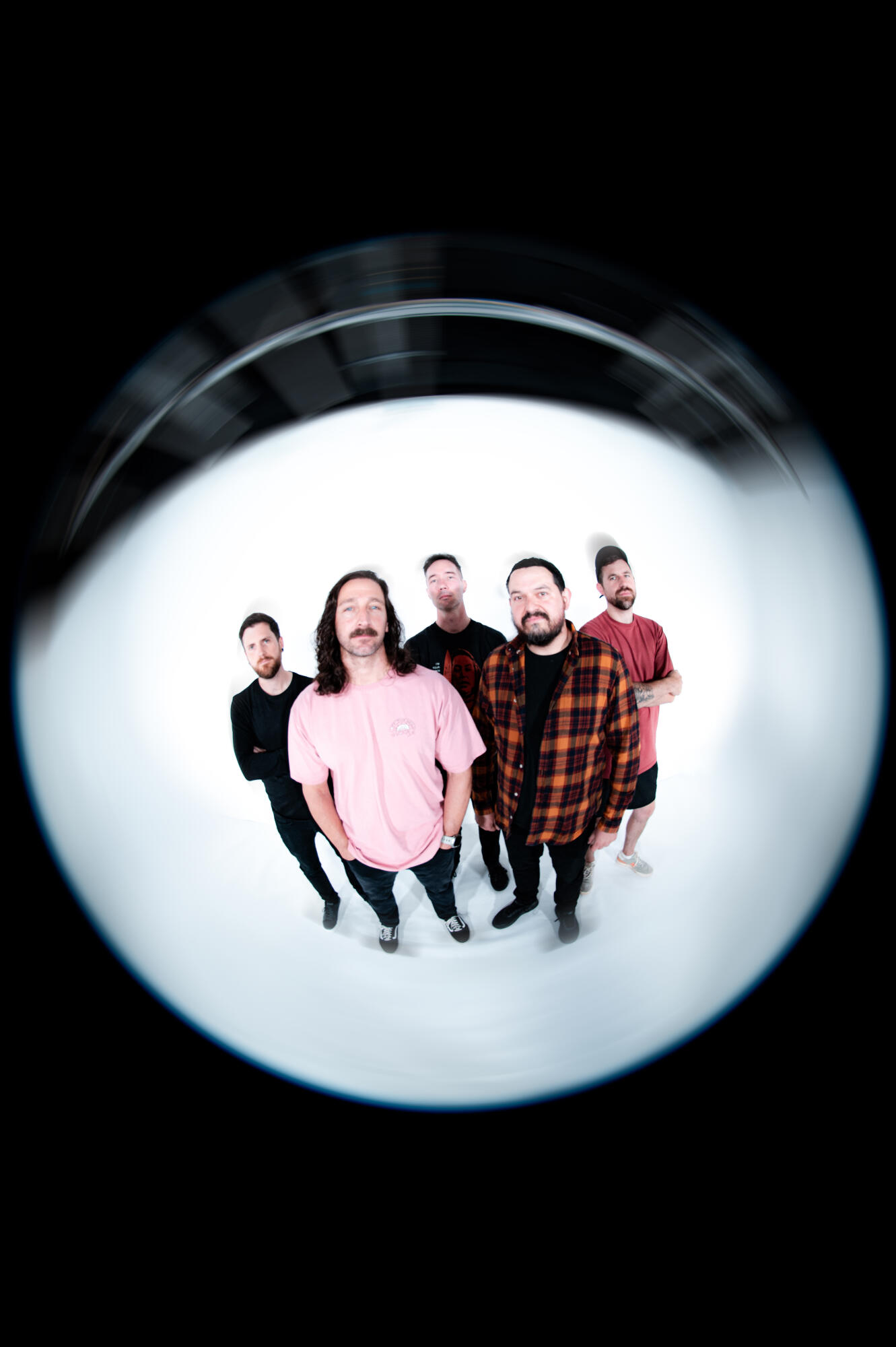
14 tracks of mangled guitars, electronic interference and mathcore with an alarming command of its own machinery. ‘Ultraviolet Parasite’ finds FRONTIERER making overload more detailed — and leaving a few unexpected openings inside it.
There is a moment in getting acquainted with FRONTIERER when you stop wondering whether something has gone wrong with your speakers.
Something has gone wrong. It has been rehearsed.
The Scotland–US outfit have spent more than a decade developing a musical language in which guitars bend into electronic squeals, rhythms appear to lose their footing and vocalist Chad Kapper sounds tasked with keeping everyone inside the vehicle. Following 2021’s ‘Oxidized’ and the elaborately titled 2024 EP ‘The Skull Burned Wearing Hell Like a Life Vest as the Night Wept’, ‘Ultraviolet Parasite’ pushes that language into a denser, more varied conversation.
At least the album title now fits on a parcel.
The interesting story is how a band already operating at this intensity finds somewhere else to go. Faster and heavier remain available, presumably somewhere near the emergency exit. But FRONTIERER are increasingly interested in what can happen inside the overload: electronic rhythms moving beneath the riffs, brief changes in texture, a vocal phrase pulling the whole arrangement into alignment.
How experimental is heavy music if we can predict exactly when we’re supposed to lose our minds?
A conventional breakdown gives the room a shared instruction. FRONTIERER enjoy interfering with the delivery. A slowing passage suggests somewhere to land, then a rhythmic displacement or digital intrusion moves the floor. The groove remains physical; getting comfortable with it takes longer.
You can still move to this. Agreeing on which direction is a separate matter.
Pedram Valiani’s guitar vocabulary is central to that instability. Pitch shifts, scrapes and abrupt changes in register become parts of the riffs themselves. The strange sounds carry hooks, establish patterns and interrupt expectations. They have compositional responsibilities beyond making the pedalboard look financially irresponsible.
Car Bomb provide a useful connection through that treatment of guitar tone and rhythmic perception. The Tony Danza Tapdance Extravaganza and Ion Dissonance offer routes into the contorted low-end force; The Dillinger Escape Plan into arrangements whose sudden turns feel both precarious and tightly coordinated. FRONTIERER give those impulses a particularly synthetic surface, with electronics running through the structure.
That distinction matters. Breakbeats and programmed textures can take over the movement, briefly changing what kind of record you think you’re hearing. The stuttering electronic spaces around “Emerging Claustrophobic” and the breakbeat passages of “Retrograde F” make Aphex Twin and Autechre useful reference points alongside the hardcore lineage.
The machines have joined the band. They appear to have brought several unresolved issues.
Kapper gives that environment a human point of contact. His voice can lock into the instrumental stabs, making the attack feel collective, then pull against them as though struggling to stay ahead. The tension between command and strain gives the music something more engaging than technical coordination alone.
You hear people operating this machinery, with all the effort that implies.
The appearance of The Armed’s Tony Wolski on “Ions & Oxygen Rockets” extends that exchange, bringing another voice into an arrangement already moving between electronic anticipation and physical release. Elsewhere, the slower pace and textural detail of “The Iodine Bath” allow ideas to register without immediately being overtaken.
These openings become significant because the album asks so much of the listener. Fourteen tracks at this density can blur together on an initial encounter. The exaggerated drum attack and tightly packed frequencies may prove exhausting even for people whose idea of easy listening involves Converge.
That is a limitation worth acknowledging. More detail does not automatically mean you can absorb it all at once.
Fortunately, there is no examination afterwards. The person explaining every time signature was doing that voluntarily.
“Our Mainframe Earache”, deep into the running order, demonstrates why returning to the record can be rewarding: its clipped, recurring figures give the ear something to recognise within the disturbance. Familiarity starts exposing the organisation. A sound that initially registered as interference becomes the part you were waiting for.
Then “Terraforming Myself” changes the terms again.
The closer gives melody, cleaner guitar and layered vocals enough room to carry a different emotional weight. After so much music built around disrupted expectations, a more sustained progression becomes an unexpected destination. Kapper’s presence connects it to everything before it; the pressure takes another shape rather than simply disappearing.
This is where ‘Ultraviolet Parasite’ finds its strongest narrative: a band stretching the expressive range of a sound that could easily have become its own enclosure. The electronics introduce other kinds of motion. The rhythmic traps keep familiarity unsettled. The closing melody reveals how much feeling the machinery has been carrying.
FRONTIERER have made plenty of room for discovery. Finding that room may initially involve walking into a wall.
Your speakers are working. Whether you are afterwards is another discussion.