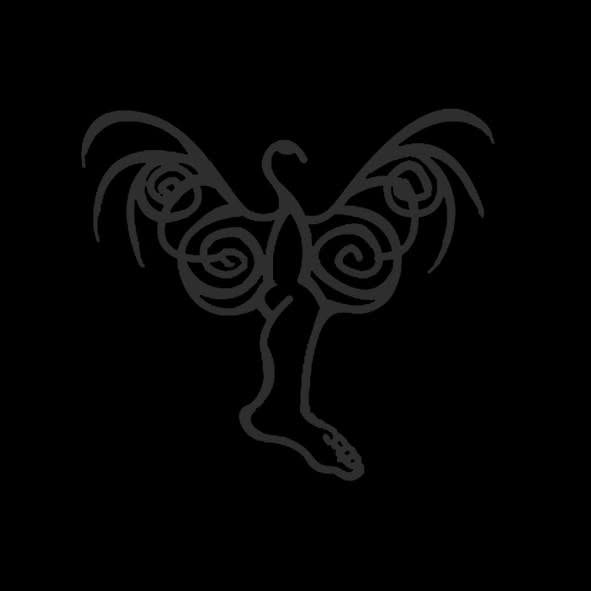
Part IV — The Farm
There are ghosts. Not metaphorical ones. Real ones.
Or at least, that’s what A Very Old Ghost Behind The Farm has been insisting since 2009.
Few bands establish their own mythology before you’ve even heard a single note. The name itself sounds less like something discovered on Bandcamp than the title of a forgotten rural horror film. An abandoned farmhouse. Overgrown fields. A dirt road nobody uses after sunset. Somewhere nearby, an old farmer quietly mutters, « I wouldn’t go there if I were you ».
Like every good ghost story, the details are almost secondary. The atmosphere is what matters. And atmosphere has always been the project’s native language.
From the very beginning, A Very Old Ghost Behind The Farm has refused to recognise the borders separating doom, sludge, stoner, crust, punk and blackened extremity. Those genres certainly exist within its music, but never as neatly organised territories. Instead, they’re pulled into the same decaying landscape, left to collide with one another until something entirely new emerges from the wreckage.
Black Sabbath, Acid Bath, Khanate, Crowbar, EYEGATEGOD… The family resemblance is obvious. The destination isn’t.
Rather than carefully assembling its influences into another homage to the great names of sludge, A Very Old Ghost Behind The Farm buries them beneath the same patch of earth and patiently waits to see what grows back. The answer has never sounded particularly American. Plenty of sludge bands dream about Louisiana. AVOFBTF never needed to.
Its ghosts already lived much closer to home. The countryside has always been more than scenery here. It is memory itself. Old farms. Forgotten paths. Weathered stone walls. Abandoned locations slowly reclaimed by nature. Ancient beliefs surviving just long enough to become local legends.
The project has consistently drawn from this rural imagination, not to romanticise it, but to reveal its darker corners. The occult, folklore and forgotten stories are never decorative themes. They become another instrument, as important as the crushing riffs or the agonising vocals. Because beneath every ghost story lies something much older. History.
That has perhaps become even more apparent with ‘Canes Gothi!’, whose exploration of the Cagots — communities persecuted and marginalised for centuries throughout the Pyrenean region — extends the band’s fascination with those pushed to the margins of memory. Here, horror no longer belongs solely to folklore. It emerges from forgotten lives, inherited suffering and histories quietly erased from the official narrative.
The ghost isn’t frightening because it is supernatural. It is frightening because it remembers. Then, just as unexpectedly as it arrived, the ghost fell silent. Following ‘La Came Crude’ in 2014, twelve years passed before A Very Old Ghost Behind The Farm returned with a new full-length.
More than a decade. In today’s music industry, that’s usually enough time for a band to become a memory. But memories behave differently inside the PMMU. While the farm stood silent, the people who built it never stopped creating. They continued exploring the caves through Prognathe. They climbed the mountain with Dead Mountain Mouth.
Later, they opened entirely new roads with Ratfish, Orphaal and Ossian’s Dream. The ghost never disappeared. It simply found somewhere else to haunt. That changes the meaning of ‘Canes Gothi!’ entirely. It isn’t a comeback in the conventional sense. There was nothing to come back from.
The twelve years separating ‘La Came Crude’ and ‘Canes Gothi!’ weren’t years of absence. They were years of transformation. The territory kept expanding. New ideas demanded new identities. Different projects emerged because they needed to exist, not because anyone had devised a carefully managed artistic roadmap.
And that’s precisely why the return of A Very Old Ghost Behind The Farm feels so natural. The farm was never abandoned. Its inhabitants were simply exploring the rest of the territory. Follow them a little further and the landscape begins to change once again. The old paths split into unexpected directions. Some become rougher. Some become quieter. Some lead towards progressive horizons no one saw coming. Others disappear into muddy riverbanks where two familiar figures have apparently decided to go fishing.
The universe, it turns out, is still growing.
_________________________________________________________________________________________
Part V — The Territory, Some Detours
From now, the Peccata Mundi territory has become strangely familiar.
The cave still echoes with Prognathe‘s mutations. The mountain continues to reveal Dead Mountain Mouth‘s long-form rituals. The old farm remains haunted. Yet none of those places have ever been enough to contain every musical idea born from the people behind them. That is perhaps why Peccata Mundi never really stands still. Not because the bands constantly reinvent themselves. Because entirely new projects quietly appear whenever a different musical language becomes necessary.
Ratfish is probably the clearest example.
When Victor Bestiole and Lundi Galilao step away from Prognathe and A Very Old Ghost Behind The Farm, they don’t really leave either project behind. They simply exchange patience for immediacy. Sludge, punk and death metal collide with almost reckless enthusiasm, producing something shorter, dirtier and instinctively violent than anything found elsewhere in the territory.
The humour surrounding the project — « when they leave the cave, they go fishing » — perfectly reflects the spirit of Peccata Mundi itself. Nothing feels overthought. Nothing exists because someone identified a market opportunity. Ratfish simply exists because those songs clearly didn’t belong anywhere else.
The same can be said of Orphaal. At first glance, it almost feels like an anomaly. The same Lundi Galilao responsible for some of the heaviest music in the PMMU suddenly embraces progressive rock, melody and emotional songwriting. Keyboards become central. Harmonised guitars replace walls of distortion. The songs breathe differently. Yet listen closely and the continuity becomes obvious. The atmosphere remains. The patience remains. The careful sense of progression remains. Only the emotional vocabulary has changed.
If A Very Old Ghost Behind The Farm explores inherited memories and Dead Mountain Mouth contemplates transformation, Orphaal turns inward, choosing intimate human stories over folklore and mythology. Further still lies Ossian’s Dream. Here, the territory becomes almost entirely instrumental. Progressive rock, post-rock and ambient textures unfold slowly across expansive compositions where atmosphere matters more than immediacy. Rather than overwhelming the listener, the music invites them to stay awhile, allowing silence and space to become part of the composition itself.
On paper, these projects seem to describe entirely different musicians. In reality, they reveal exactly the opposite. They demonstrate that the same creative circle has never been interested in repeating itself. Every project answers a different artistic necessity. Every band becomes another way of exploring ideas that simply couldn’t exist inside the previous one. Perhaps that’s why none of them feel like side projects. They’re all part of the same conversation.
_________________________________________________________________________________________
Epilogue
Looking back across the Peccata Mundi territory, it’s tempting to focus on the obvious differences. The violence of Prognathe. The ritualistic weight of Dead Mountain Mouth. The rural folklore of A Very Old Ghost Behind The Farm. The instinctive urgency of Ratfish. The introspection of Orphaal. The instrumental landscapes of Ossian’s Dream. And More… (cf : Monsieur Boniface, Opus Octopus…)
On paper, they have very little reason to belong together. And yet they do. Not because they sound alike. Not because somebody decided they should. But because they all seem to grow from the same place. Not geographically. Musically. Humanly. The same musicians. The same artistic relationship. The same curiosity. The same desire to keep exploring without worrying too much whether the next song belongs to an existing band or deserves becoming something entirely different.
Perhaps that’s why twelve years between two A Very Old Ghost Behind The Farm albums ultimately doesn’t feel like twelve years at all. During that time, the music never really disappeared. It simply kept finding different voices. Different tempos, atmospheres, names. And if the past few years have taught us anything, it’s that the territory isn’t shrinking. Quite the opposite. Ratfish appeared. Orphaal opened another door. Ossian’s Dream continued travelling further into instrumental territory.
Tomorrow… Who knows? Perhaps another project is already taking shape somewhere between a rehearsal room, a home studio and a notebook full of unfinished riffs. Perhaps we’ll hear from the Ghost again. Perhaps Prognathe will mutate once more. Perhaps something entirely unexpected will emerge. At this point, predicting the next step almost feels beside the point. Because that’s never really been what Peccata Mundi is about. It isn’t about maintaining bands. It’s about letting music find the form it needs.
Sometimes that form lasts one record. Sometimes twenty years. Sometimes it disappears for more than a decade before quietly returning as though nothing had happened. Around here, that’s perfectly normal. And perhaps that’s the most remarkable thing about Peccata Mundi. Not that it keeps creating bands. But that it has quietly created something far rarer. Just a place where the music is always free to keep moving.