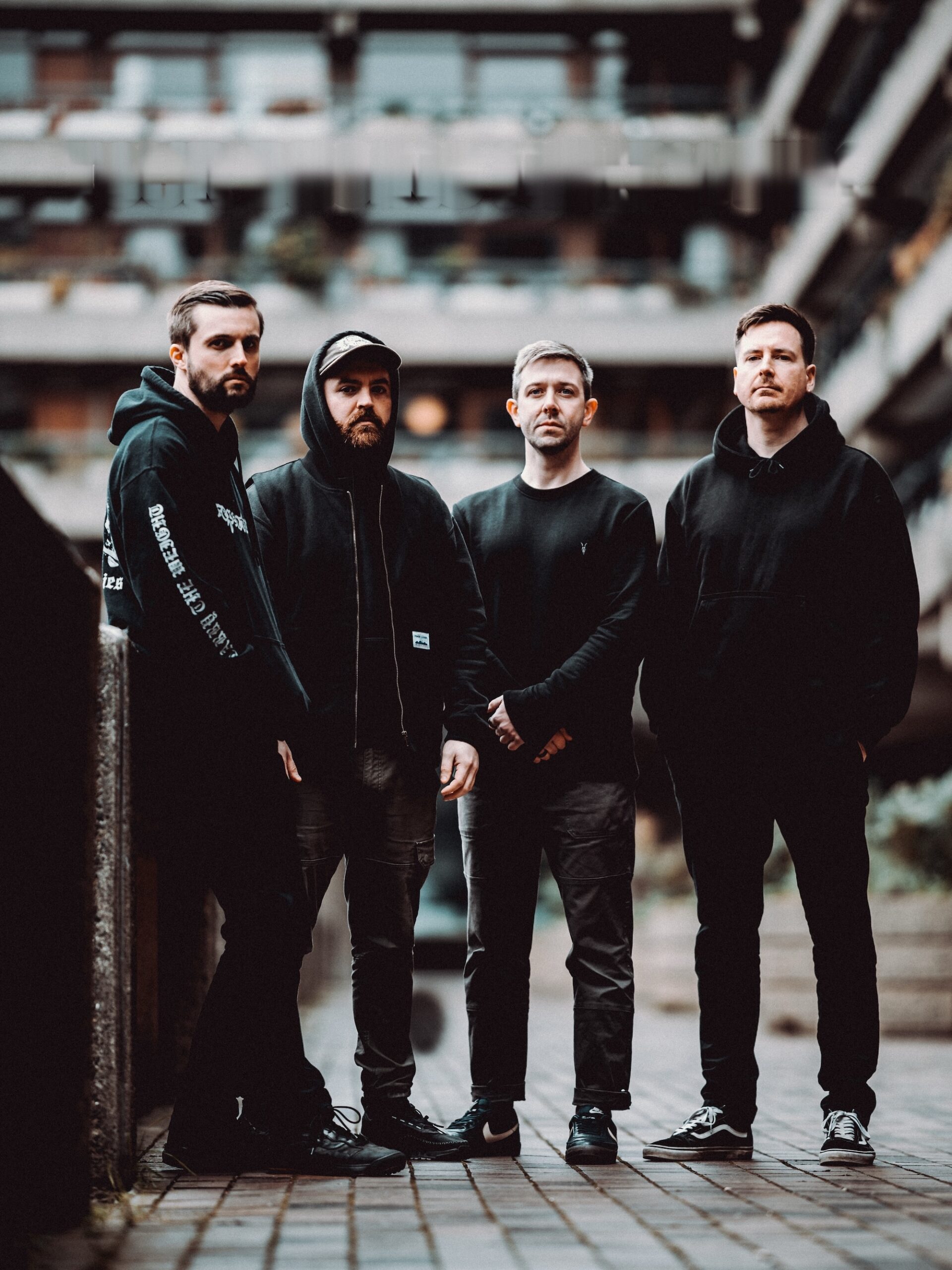
On ‘No One Is Coming to Save Us’, the London quartet give their anger more room and a harder target. Their debut looked at the wreckage. This time, they want to know why we keep making it.
There’s a point in “Sunrise, Parabellum” where the whole band locks into a breakdown so blunt it could end a meeting. Matthew K. Heafy of Trivium is along for the ride. Less than three minutes, no further business.
That’s one way into BURNER’s second album, released through Church Road Records. The other is “The Third Revelation”, which takes nearly eight minutes to get where it’s going. Clean guitars hang in the air; riffs advance in fits and starts; a rush of blackened melody breaks the deadlock. A band this good at throwing the first punch has found out how much it can do before throwing it.
Across eleven tracks, that extra room lets vocalist Harry Nott turn the question behind It All Returns to Nothing inward. The debut looked at violence across history. Here, the fixation is on the people who perpetuate it: how readily we repeat old mistakes, how selectively we remember them, and whether we’re capable of learning anything useful in between.
If we know how this ends, why are we so good at starting it again?
The music gives that question some teeth. The HM-2-style guitar buzz has the abrasive grain of Trap Them, but you can still hear the pick attack and the drum accents through it. Gatecreeper and Bolt Thrower are useful reference points for riffs that roll forward under their own weight; Converge and END for the way a sharp rhythmic turn can knock that momentum sideways. And when BURNER settle into a breakdown, there’s a bit of Harm’s Way in how much force they get from making the hits count.
Nott’s voice moves between low roars and a higher, fraying scream. Josh Middleton of Sylosis joins him on “What Will You Give”, while Anthony Lucero of Cult Leader adds a vicious second voice to “Kurtz”. Three guests across the record, each with something to do. Nobody appears to have been invited merely to improve the poster.
The real pivot is “The Agony of Peace”. Clean guitar and a wash of blackened melody, closer to Danish practionners MØL than the grind of the album’s shortest tracks, give grief an opening. You can hear why Nott describes the record as mournful as well as furious. The thing worth mourning is the progress people fought and sacrificed for, and how easily it can be undone. Those same acts of courage also complicate the album’s bleakest premise.
If we’re capable of repeating the damage, we’re capable of remembering what it took to stop it.
By “Agni Kai”, the other near-eight-minute bookend, BURNER can move from a sprint to a punishing churn without losing the thread. The longer format does ask more of the listener; eleven tracks at this intensity can make even a change of pace feel like work. But the space gives the record somewhere to put its doubt, and the next riff lands harder for it.
There’s no neat resolution at the end. The title leaves us with a choice about how to hear it: as permission to give up, or as a reminder that waiting is a decision too.
No one is coming to save us. The breakdown, at least, has arrived.