
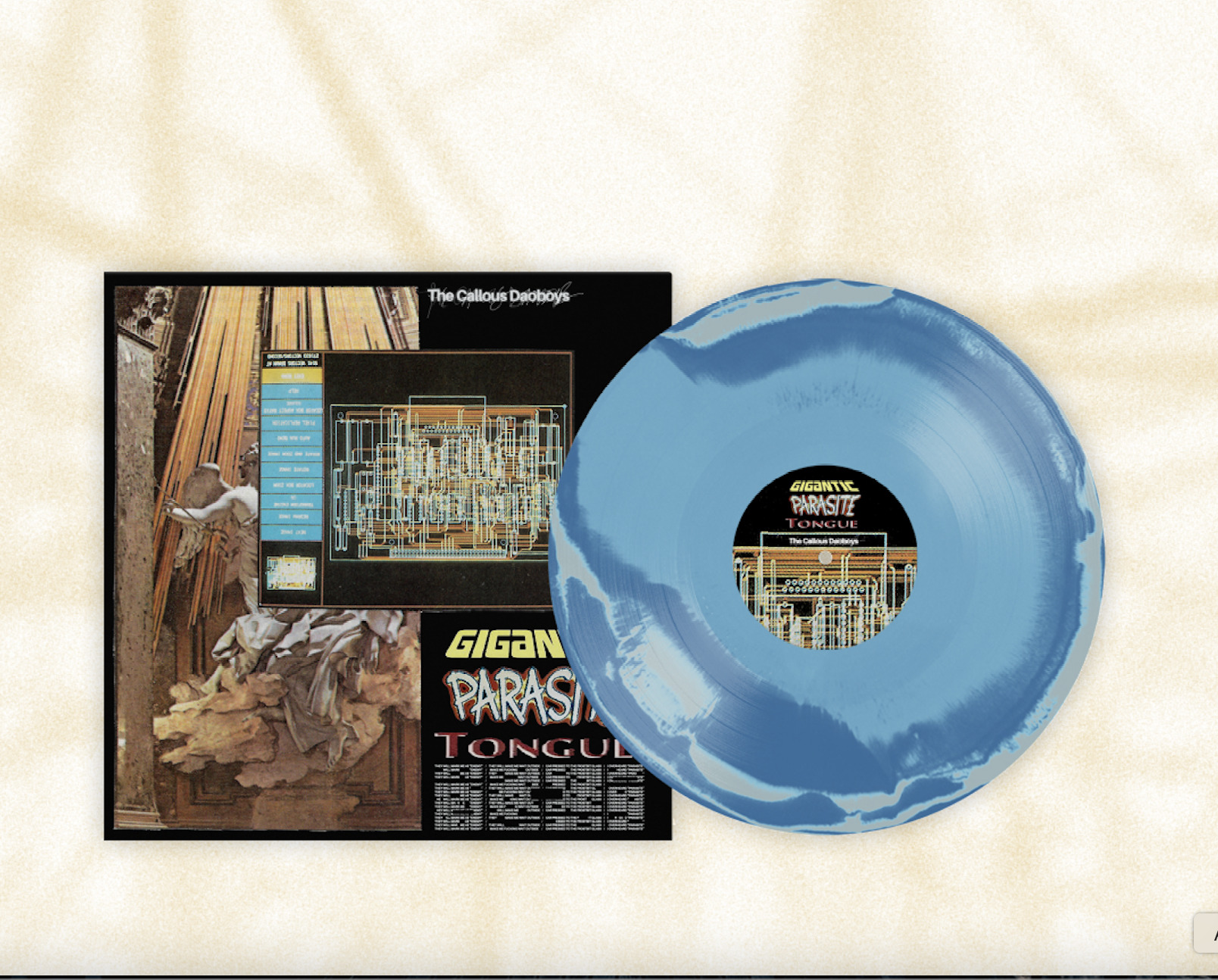
“Gigantic Parasite Tongue” and “Watching Us Kiss” share a ten-inch record, some formidable grooves and a questionable understanding of personal boundaries. Atlanta’s genre contortionists would like your attention. You may want to ask what for.
Being unpredictable is getting predictable. Heavy bands have been interrupting riffs with electronics for long enough that we should probably stop acting surprised.
The Callous Daoboys understand the problem. Across “Gigantic Parasite Tongue / Watching Us Kiss”, their two-track 10-inch through MNRK (), the interesting question becomes how to make disruption mean something beyond “look how many things we can fit in here”.
Following 2025’s ‘I Don’t Want to See You in Heaven’, the pairing offers two routes into their increasingly uncomfortable world. Both have excellent rhythmic foundations. Neither appears to have passed a safeguarding inspection.
“Gigantic Parasite Tongue” starts with a fairly explicit musical reference: guitarist Dan Hodsdon cites Meshuggah masterminds playing “Future Breed Machine” at Download 2005. A refreshingly specific answer to “what were you going for?”
The track’s low-end attack, angular phrasing and bass-drop weight make that connection useful. Its force comes from the relationship between repetition and interruption: establish a pulse, let the listener settle into it, then introduce a reason to reconsider their footing.
You can admire the rhythmic construction. You can also move to it without submitting your qualifications.
The video, directed by Sam Hahn, follows an angel kidnapped for a ritual intended to transfer its divinity. There’s a nasty little idea in that image: wanting someone else’s exceptional qualities while treating the person as disposable.
Everybody wants a piece of you. The Daoboys have taken the expression rather literally.
“Watching Us Kiss” brings the disturbance home.
Heavy grooves meet processed violin, chopped gospel voices and abrasive guitar noise. The arrangement keeps recognisable sounds close enough to identify, then makes them behave strangely. The violin is especially useful here: sharp, unstable, thoroughly uninterested in providing a tasteful orchestral moment.
Meanwhile, Carson Pace turns voyeurism into confrontation. The accompanying video’s domestic tableaux make watching feel increasingly implicated in what unfolds. You came for a music video; your viewing habits have been invited into the discussion.
When does paying attention become helping yourself to someone else’s life?
That question gives the spectacle some bite. The music invites a physical response while the imagery complicates the pleasure. A groove can be irresistible and its surroundings deeply unpleasant. The Daoboys seem quite comfortable leaving you with both.
Listeners coming through The Dillinger Escape Plan, Meshuggah or Mr. Bungle will recognise elements of the vocabulary: coordinated volatility, rhythmic pressure, familiar gestures made suspicious. The personality lies in the timing—and in a band willing to make its own excess funny.
Taking the craft seriously doesn’t require looking solemn throughout. Particularly when you’ve called a song “Gigantic Parasite Tongue”.
Two tracks prove a useful format for that approach. Enough space to establish two distinct atmospheres, little opportunity to let the provocation become routine.
The riffs get you involved. What you’ve become involved in takes a little longer to establish.
Please turn the record over before drawing conclusions about the household.
Screenshot