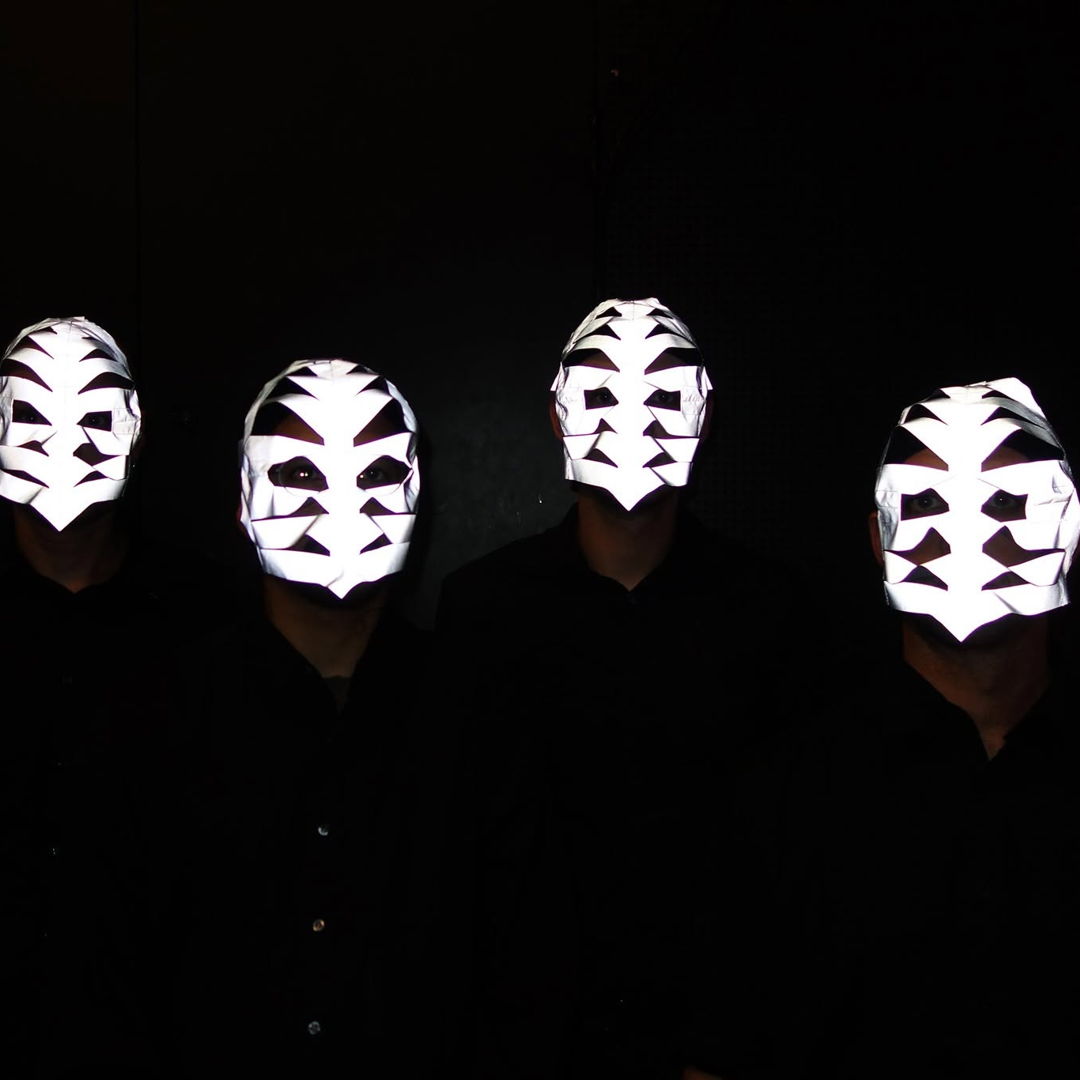
On ‘Anatomy of Rage’, the Swiss quartet put bass clarinet, violin, bass and drums to work on the many shapes of anger. Poetry joins the conversation. Nobody seems especially interested in keeping their voice down.
Heavy music has spent decades debating amplifiers, tunings and the correct number of strings. doom/noise/drone/jazz/experimental/prog’ collective CONVULSIF have arrived with a bass clarinet and a violin.
There may be a form to fill in.
The Swiss avant-garde quartet’s fourth studio album, ‘Anatomy of Rage’ – released via various independant labels such as Araki Records, Cheap Satanism Records, Day Off Records, Deszpot, Mtaf Records & Ramble Records – makes an interesting starting point for that discussion. Here is music with the weight, friction and physical insistence we associate with extreme rock, built from instruments that suggest rather different rehearsal-room arrangements.
Loïc Grobéty’s bass and Maxime Hänsenberger’s drums provide the foundation. Above and around them, Jamasp Jhabvala’s amplified violin and Christian Müller’s manipulated bass clarinet stretch the available textures from sustained pressure to abrasive dissonance. Knowing who plays what changes how you hear the whole thing. A sound you might instinctively file under “guitar doing something unpleasant” acquires another origin.
How much of what we call heavy is the sound itself — and how much is recognising the equipment?
CONVULSIF have been exploring that territory for more than a decade, emerging from Grobéty’s larger Convulsif Bigband project into a quartet in 2014. ‘Anatomy of Rage’ develops the dialogue between composition and improvisation that has shaped their work, with one significant new participant: the human voice.
Müller’s compositions meet poems by Swiss writer Regina Dürig, bringing language into the band’s music for the first time. The voice becomes another source of texture, rhythm and meaning inside the ensemble. Anyone expecting the arrival of a reassuring singalong should probably retain a flexible definition of reassurance.
The album’s subject gives that addition a purpose. Rage has duration, rhythm and physical consequences. It can accumulate slowly, interrupt without warning, or settle into something persistent and difficult to shift. CONVULSIF give those different states musical form.
And, occasionally, considerable groove.
That deserves emphasis. Free-jazz vocabulary and experimental instrumentation can make a record sound like it requires preparatory reading. Here, the rhythm section gives the listener a physical route through the disturbances. “Being Put Down” has a rock-like pull, “Facing the Fasces” works through more tangled patterns, and “A Torch Then Blaze” brings an industrial-adjacent insistence.
You can follow the argument with your shoulders. The seminar can wait.
The instrumentation helps make those movements distinctive. A bowed string can sustain tension differently from a picked one; breath gives a phrase another kind of attack and exhaustion. Amplification and electronics complicate those identities further. The ensemble can establish a pattern, roughen its surface, then pull the arrangement somewhere less stable while retaining enough pulse to keep you involved.
Listeners of Zu and Naked City will find useful connections in that collision of instrumental personality and abrasive force. Bohren & der Club of Gore offers a route into the darker patience; Neurosis and Swans into repetition as accumulating pressure. Brutal Truth points towards the shorter eruptions. Quite a dinner party. Sensible to check the neighbours are away.
The sequencing gives these different impulses room to interact. Among nine tracks, several are brief, concentrated disturbances. Then “The Pitch, the Plight, the Polymer” occupies more than nineteen minutes in the penultimate position, followed by the short closing piece “Useful Curses”.
That changes the scale of the listening. The shorter tracks establish pressure through compression and interruption; the long piece asks what happens when you stay inside it. Some of those abrupt endings may feel unresolved, but the imbalance is part of the record’s character. It keeps you adjusting your sense of where the music might settle.
Recorded live at Rec. Studio in Geneva in January 2025, with the master Serge Morattel (Knut, Impure Wilhelmina, Ventura, Year Of No Light, Zatokrev…) handling recording, mixing and mastering, the album preserves the encounter between written material and four musicians responding in the room.
That is the story worth following through Anatomy of Rage: a group developing a shared language, then admitting words into it without surrendering its unpredictability.
The anger has structure. The structure has openings. Something might come through them.
The guitar position remains vacant. Noise complaints can be addressed to the woodwind section.