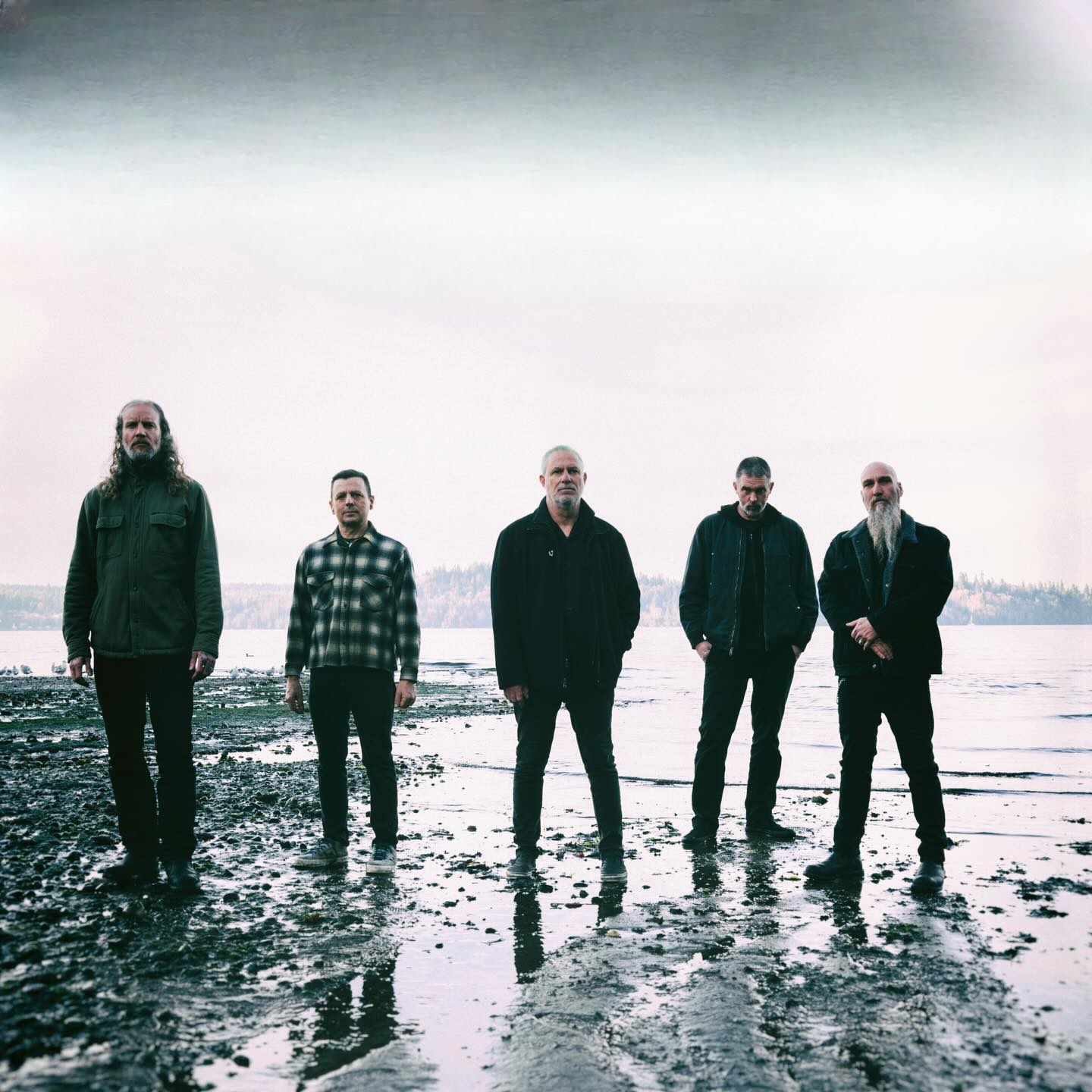
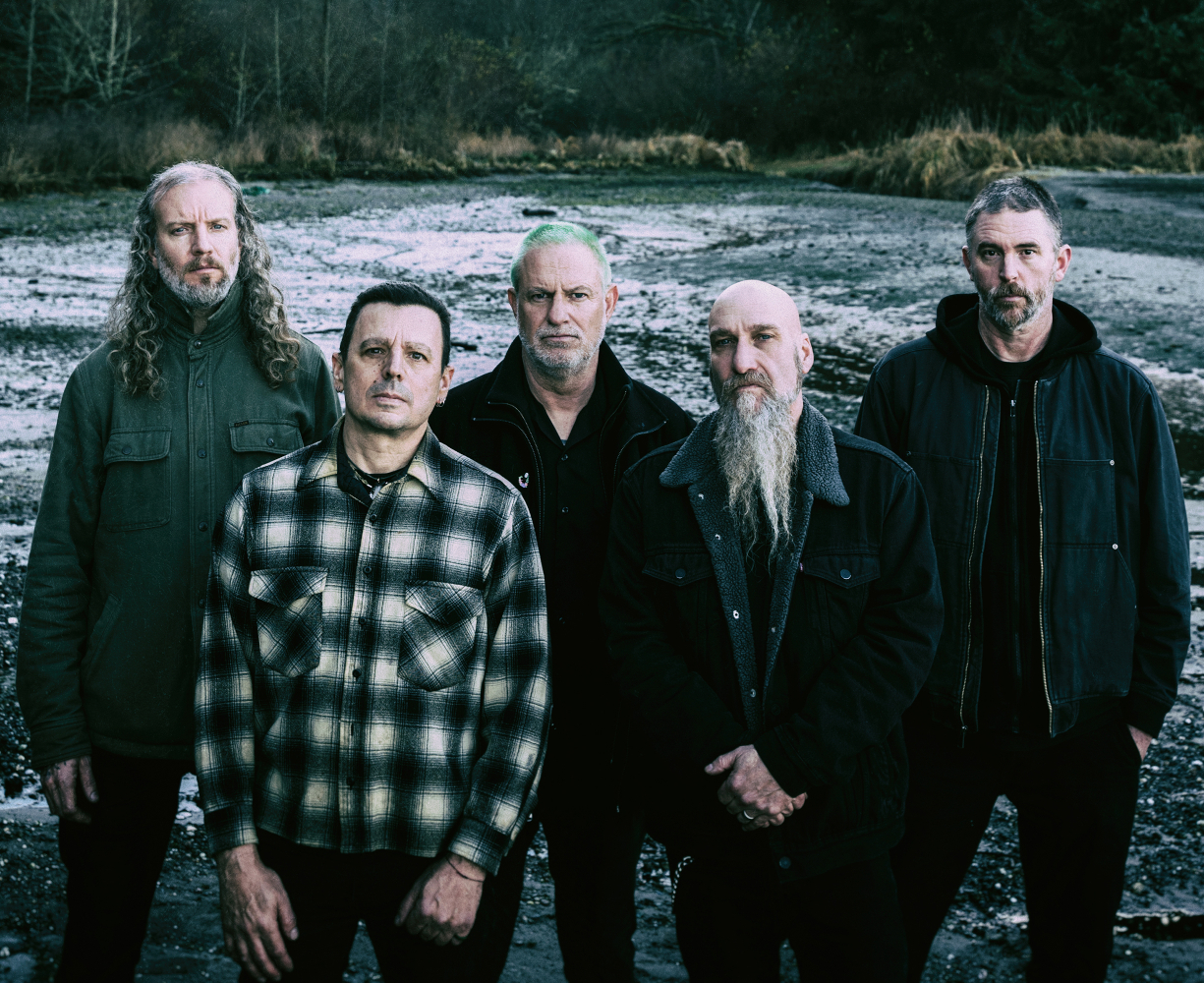
On their surprise-released album Neurosis aren’t just back, they’ve transcended their past. ‘An Undying Love for a Burning World’ is a rebirth, a reckoning, and a masterpiece.
A year ago, Neurosis’ story seemed to have reached its definitive conclusion. Jason Roeder, the band’s drummer of four decades, was making cryptic posts online about offloading gear and leaving the road. The remaining members, it seemed, would move on in some uncertain form — « with or without me » Roeder surmised. The band’s most recent record, ‘Fires Within Fires’, had come and gone in 2016.
And hovering over everything was the uglier reason for their prolonged silence: in 2019, Neurosis had quietly excised their cofounder Scott Kelly after learning he had subjected his family to years of domestic abuse and emotional manipulation. When Kelly finally confessed publicly in 2022, the band offered no quarter. « We just don’t believe that is the case here » they said of his disclosure. The rupture felt like the closing act of something irreplaceable.
Then, on the Spring Equinox — a day so traditionally auspicious for renewal that the Swiss literally set snowmen on fire to celebrate it — Neurosis dropped ‘An Undying Love for a Burning World’ via their own imprint Neurot Recordings, with zero advanced warning, and a lineup change that sent shockwaves through the heavy music world: Aaron Turner, the towering creative force behind Isis, Sumac, Old Man Gloom, and founder of the legendary Hydra Head Records, had joined as guitarist and vocalist.
« He stands taller on the shoulders of Neurosis than anyone else in post metal — making him the ideal fit to enter the band and help heal the legacy that was so formative to his own. »
On paper, the fit is almost absurdly perfect. Turner has described the 1993 Neurosis album ‘Enemy of the Sun’ as blowing him away — its own universe, retaining « a big element of mystery ». The Neurosis of the ’90s – those apocalyptic avalanches of heaviness and atmosphere on records like ‘Through Silver in Blood’ – are arguably the most important precursor to what we now call post metal. Turner then became the genre’s most significant inheritor, pushing it into uncharted territory with Isis and beyond. Now he steps inside the tradition that shaped him, and the results are extraordinary.
The album opens with a declaration of suffering — 52 seconds of shouted poetry over a throbbing pulse that does what so many « intro » tracks fail to do: say something meaningful. « We Are Torn Wide Open » frames the record’s central obsession: humanity’s animal nature grinding against our artificial, algorithm-mediated lives. Then « Mirror Deep » arrives like a tornado, squealing electronics, browbeating sludge riffs, and a climax that could have come from a Converge song. Von Till’s gritty shouts and Turner’s frayed howls trade lines above the turmoil before a brooding synth passage cuts the track in two, making everything more sinister. It is a ferocious statement of intent.
Two Voices, One Vision
The most immediate gift Turner brings is a genuine sparring partner for Steve Von Till. Where Von Till and Kelly once operated like a Janus-faced singer – one body, two voices – Von Till and Turner are genuinely distinct presences in dialogue. On « First Red Rays » and the towering « Blind » Turner’s bellowing howl and Von Till’s cleaner grain weave around each other through eight and nine-minute journeys respectively, moving from terrifying sludge peaks through serene valleys of mournful contemplation and languid prog-rock atmospherics. Turner’s influence manifests as a more flowing, contemplative architecture : a tendency toward large, patient textures that allow these songs to breathe and flourish rather than simply accumulate mass.
Noah Landis’ modular electronics deserve particular mention. His alien synth work coats much of the album with an unnerving membrane – at once celestial and industrial – that opens new sonic territory for the band without abandoning their signature earth-and-fire heaviness. Meanwhile, drummer Jason Roeder remains one of the most ferociously precise rhythmic forces in heavy music; his hammered, choppy patterns underpin the album’s most brutal passages with absolute authority.
« Seething and Scattered » and « Untethered » introduce harder rock and noise-rock textures the band haven’t previously explored — attempts to sonically embody the fracturing zeitgeist and the technologies that fuel it. These are the album’s least graceful moments, but they earn their place by keeping the record fresh heading into its monumental final act. The standout in this pair arrives when bassist Dave Edwardson takes the microphone on « Seething and Scattered, » his gruff growl railing against the media industry’s polarizing machinery over simple, crushing rock chords. It is one of the most memorable moments on the record.

Last Light
The album ends on two enormous works that represent the most complete and harmonious integration of everything this new configuration of Neurosis can do. But it is the 16-minute closer, « Last Light, » that will define this record’s legacy. It opens with a rapid synthesizer heartbeat — urgent, afraid — over which Turner delivers the most visceral lament of human mortality on the entire record.
What follows is the band at their most architecturally ambitious: verse sections that construct entirely new atmospheres before spiraling outward into vast instrumental expanses, integrating post metal, post-industrial, and progressive rock in a sequence that feels organic rather than stitched together. Around the midpoint, the song crash-lands into a passage of scathing scrapes and alien atmospherics before Edwardson’s bass places a warm hand on your shoulder — rays of light intensifying from the darkest hues. A booming organ, reminiscent of Jon Lord, cranks up the volume. The last thing you hear is scorched feedback dying over a thudding heartbeat gone into overload.
« Despite going through several bold transitions, the song still flows organically — a testament to how unified this new iteration of the band has become. »
It is the sound of a band not merely surviving a rupture, but metabolizing it into something newly alive. ‘An Undying Love for a Burning World’ is Neurosis’ best work in at least two decades — and arguably a quarter-century. It reclaims the titanic weight and aura of their most iconic material while burning with the immediacy and heart of something genuinely new. These eight songs demand we acknowledge the darkness for what it is. Then they demand we get on with the living.
Neurosis are back… and reborn. ‘An Undying Love for a Burning World’ is an astonishing return: a modern classic that heals a fractured legacy, integrates Aaron Turner’s melodic brilliance with the band’s foundational brutality, and arrives with the quiet amazement of someone rediscovering their own reflection. An essential listen.